
AI Avatars & Spatial Computing · Trade fairs
AI Avatars for Trade Fairs, Events and Congresses
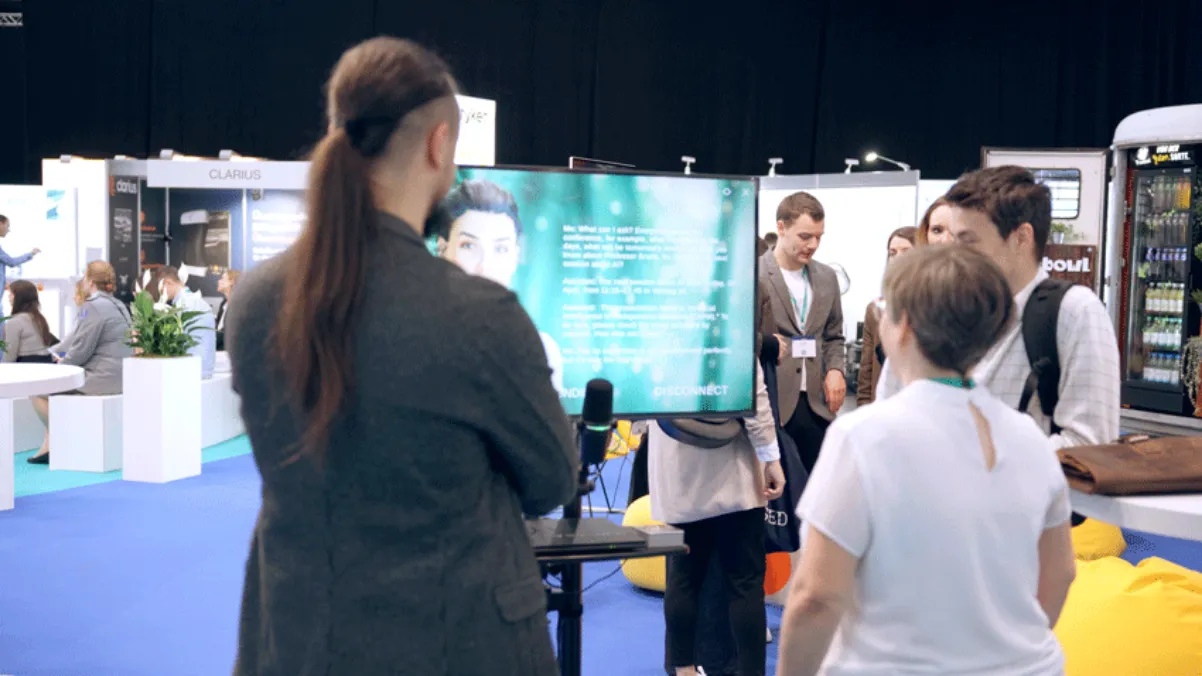
An AI avatar welcomes visitors at a trade fair booth or in a congress foyer and answers questions about the programme, speakers, locations and products instantly, in conversation. At DCK 2024 in Leipzig, such an assistant answered attendees’ questions for four days.
 Julia Rose
Key takeaways
- AI avatars, also called digital humans, answer visitor questions in real time on a monitor, a tablet or in a VR headset.
- At trade fairs and congresses they take pressure off information desks and stay available when everyone arrives at once.
- Built on large language models, they respond to questions asked in any wording and know the programme, exhibitors and products.
- Gartner expects that by 2027 most B2C enterprise CMOs will have a dedicated budget for digital humans.
What is an AI avatar at a trade fair?
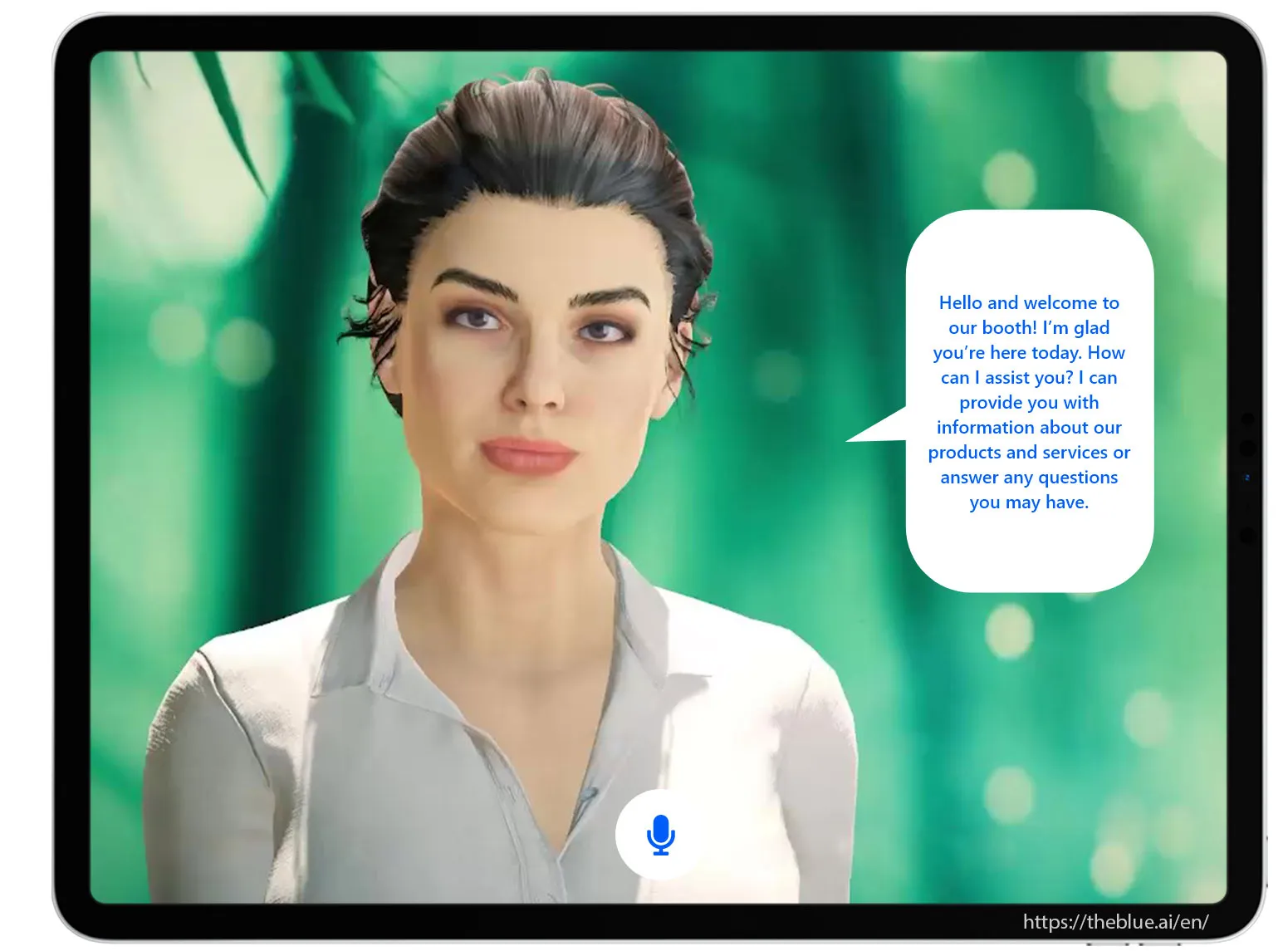
An AI avatar is a digital human that welcomes visitors to your booth and answers their questions instantly: about the agenda, speakers, the venue or your products. It sits right at the booth as a central point of contact and is available at any time. Such avatars are also called digital humans. They appear on a large monitor, a tablet, a computer screen or in a VR headset.
That makes them far more useful than an information board. Visitors get a personal welcome and targeted information about products, offers and services, automated and tailored to the company. Beyond trade fairs and congresses, avatars work at corporate reception desks, in healthcare, in e-commerce and in logistics.
Why companies are turning to AI avatars
Avatars inform visitors without staff having to be on site all the time. That saves costs and opens a modern, interactive way to start conversations with customers and prospects.
Gartner lists digital humans among the six trends driving adoption of metaverse technologies. By 2027, according to that forecast, the majority of B2C enterprise CMOs will have a dedicated budget for digital humans in metaverse experiences. Organisations plan to use them there for customer service, support and sales.
Source: Gartner press release, 13 September 2022
Benefits of AI avatars at trade fairs and events
- Real-time answers: the avatar answers questions quickly and accurately and provides the right information.
- Always available: even at peak times between sessions, nobody has to queue at the information desk.
- Interactive experience: voice and visuals together make the conversation lively and memorable.
- Flexible style and language: avatars can be realistic or cartoon-style and speak several languages.
In practice: DCK 2024 in Leipzig
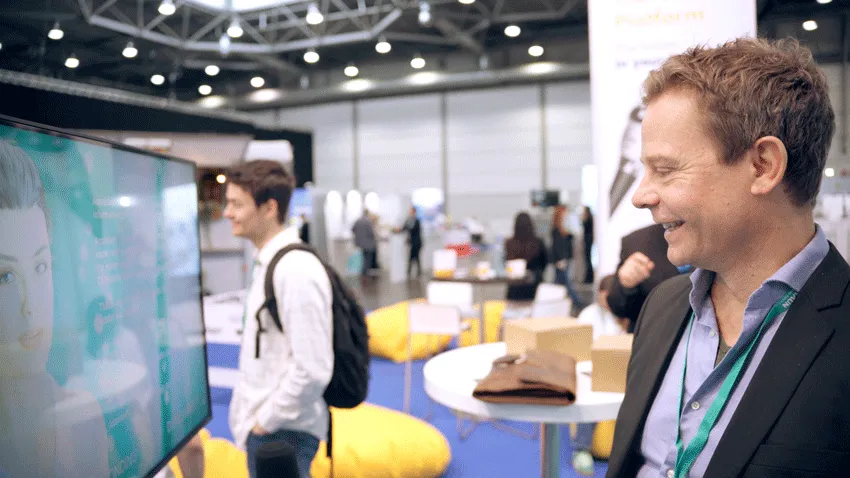
At the 141st Congress of the German Society of Surgery, an AI assistant answered attendees’ questions for four days, across hundreds of parallel sessions. Visitors walked up and asked out loud, for example which workshops still had places that afternoon. The assistant ran on a kiosk and as a VR experience on Meta Quest 3, with no queue.
The technology behind AI avatars
AI avatars use artificial intelligence and its fields of machine learning and natural language processing (NLP). Simple avatars work with pre-programmed answers and quickly reach their limits. Avatars built on large language models (LLMs) and generative AI adapt to the context and needs of each visitor and also answer questions nobody anticipated.
Our article AI Avatars: Bringing Digital Interactions to Life explains how the language model, speech recognition and rendering work together.
Why developing an AI avatar takes expertise
There are platforms for creating avatars online. They often lack the ability to respond to visitors flexibly and intelligently. An avatar developed for a specific use knows the products, the programme and the brand’s voice. That takes experience with current AI frameworks and with connecting the avatar to a company’s own data.
AI avatars in other industries
- Healthcare: avatars provide patient information, answer questions about treatment and help in waiting areas.
- E-commerce: as virtual shopping assistants they help customers choose products and answer questions.
- Logistics: in warehouses and distribution centres they give information on orders and deliveries and relieve staff.
- Customer support: they answer quickly, route customers to the right place and resolve simple issues themselves.
How theBlue.ai develops AI avatars
We develop AI avatars for events, reception areas and other settings and tailor each solution to the client’s requirements. Appearance and function go together: from choosing a realistic or cartoon-like style to matching the brand’s language and tone. Find out more on our AI avatars page.
Conclusion: AI avatars have arrived at trade fairs
Growing demand and the versatility of AI avatars show that digital assistants have found their place at trade fairs, events and congresses. Companies use them to create experiences that go far beyond traditional customer service. An avatar plays to its strengths when it fits the setting, the data and the brand.

An AI avatar for your event?
We work out with you which questions the avatar should answer, which data it needs and how it runs on site.
Request a projectFrequently asked questions
An AI avatar is a digital, interactive assistant with a face and a voice. It answers questions in real time and talks with people using artificial intelligence.
They answer instantly, stay available throughout the event and offer a new way to interact. Information desks are relieved, and visitors get targeted information about the programme, exhibitors and products.
AI avatars are used in healthcare, e-commerce, logistics, events and customer support, among others.
Artificial intelligence with machine learning and natural language processing. Large language models let the avatar understand questions asked in any wording and answer appropriately.
Julia has been part of theBlue.ai since 2019 and has accompanied the development of AI applications in the enterprise environment since the company’s early days. In her role as Marketing Lead, she works closely with the engineering and consulting teams and makes complex technical topics understandable and accessible for decision-makers.
In her articles, she writes about practical experience from enterprise AI projects, as well as the challenges and opportunities of using AI in companies.