Order intake
Orders from emails and attachments
Customer orders are read from the email text and attached files, matched to the right article in your catalogue even when the customer’s wording differs, and entered into the ERP.

Industries · Manufacturing
theBlue.ai builds custom AI systems that turn customer emails into orders, watch machine and sensor data for signs of failure, check parts on camera and give technicians answers from technical documentation. Each system connects to the ERP, MES and product data you already run, such as SAP or your own applications, on-premise, in the cloud or hybrid.
AI in manufacturing reads orders, enquiries and technical documents that arrive by email or as attachments. It recognises details such as products, quantities, dates and customer numbers and matches them against the company’s master data.
It also evaluates machine and sensor data to spot irregularities early. The results go to the ERP, MES or maintenance systems already in use on the shop floor.
The gain: less retyping in order intake, faster answers to customers and early warnings before a line stops. Unclear orders and edge cases stay with the people who know the product.
Project example · Radaway
Radaway, an international bathroom equipment manufacturer, receives most orders by email, in whatever wording and format the customer chooses. A first LLM system extracted the data, but product references often missed the database and orders in attachments still went to manual entry. We reviewed it and made it reliable enough for production.
Some of the organisations we have built for















What AI takes over
Manufacturers lose time where data is typed, checked or searched by hand: in order intake and sales, maintenance and quality, purchasing, planning and service.
Order intake
Customer orders are read from the email text and attached files, matched to the right article in your catalogue even when the customer’s wording differs, and entered into the ERP.
Sales
Questions about dimensions, variants, compatibility and delivery times get a draft reply from your product data and data sheets, ready for the sales team to send.
Maintenance
Sensor data from machines and lines shows the actual condition of each asset. Service follows wear, and failures are caught before they stop production.
Installed base
Installed equipment reports its state from a minimal set of sensors, and the models keep working where the connection drops. Service goes out when it is needed.
Quality
Camera images from the line are checked for defects such as scratches, cracks or missing components, and suspect parts are flagged for the quality team.
Quality
Customer complaints and service reports are classified by product and fault, and patterns that point to the same cause surface early.
Purchasing
Order confirmations, delivery notes and invoices from suppliers are read, matched against the purchase order and deviations in quantity, price or date are flagged.
Planning
Planners and plant managers ask for output, stock and order backlog in plain language, by text or voice, straight from the ERP, MES or your own reporting.
Service
Technicians ask about manuals, spare parts lists and past service cases in plain language and get the answer with a link to the passage it came from.
How it works
Please send 12 shower enclosures, 90 by 90, clear glass and the matching white trays for the Lindenhof project.
We need everything on site by 28 May.
Order · draft
Illustrative example with invented data, based on the Radaway case study.
Built for manufacturing
Customers who do not use catalogue names, data that has to be right before it enters the ERP, and machines in places without a stable connection.
Semantic matching finds the right article even when the customer describes it in their own words, and a validation step checks the context before confirming.
Structured output formats, validation logic and handling for edge cases keep wrong data out of the ERP.
Data is processed and stored locally when the connection drops and synced once it returns, on the machine or in the field.
The system extracts, detects and prepares. Unclear orders, maintenance orders and quality decisions stay with your teams.
Case studies
Our order processing project for a bathroom equipment manufacturer, and two projects for industrial manufacturers: the state of elevators in the field from sensor data, and a predictive maintenance architecture.

Manufacturing · Radaway
Orders arrive as free-form email in whatever wording the customer chose. We took an existing LLM system the last stretch to production: semantic product matching, attachment processing and 90 percent less manual work.
Read the case study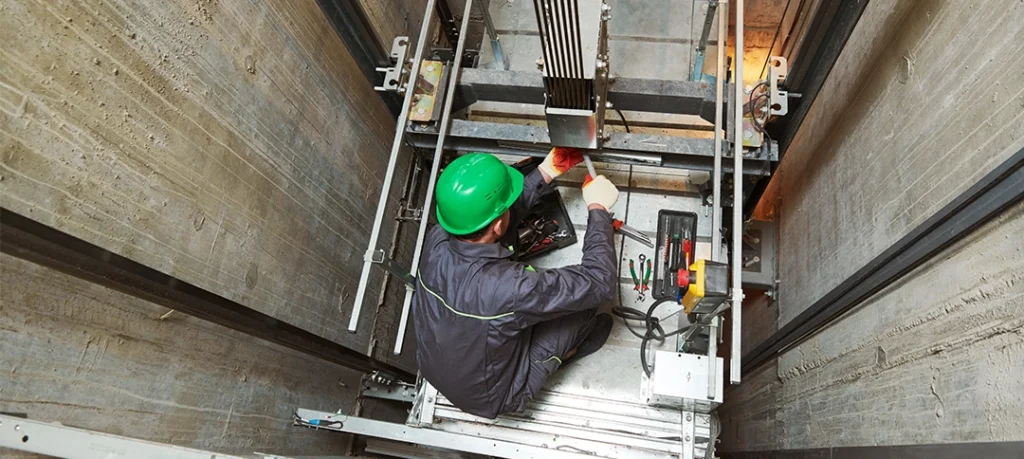
Manufacturing & IoT · under NDA
Maintenance teams inspected elevators by hand to determine their status. A model now reads position and operating state from few sensors, which lays the groundwork for fleet-wide predictive maintenance.
Read the case study
Automotive · under NDA
Unplanned equipment failures were causing costly production stops. We assessed the existing infrastructure and delivered an architecture for predictive maintenance together with the path to get there.
Read the case studyHow to start
An order inbox, a production line or a stack of complaints: the work your team does by hand today, and the data it runs on. We check early whether the data carries the use case and where it may be processed.
Tell us where the manual work sits and which data it involves. We come back within one business day with an initial assessment and a proposal for a 30-minute scoping call.
Describe your processWorkflows mapped, your data sources and requirements checked, and an architecture proposed with scope, timeline and cost. A standalone engagement with no commitment to proceed.
See the AI Discovery WorkshopFAQ
In manufacturing, AI takes over work that sales, quality and service teams otherwise do by hand: orders from customer emails and attachments, product inquiries, machine and sensor data for maintenance, the state of installed products, camera images in quality inspection, complaints, supplier documents, production figures and service manuals. The AI system prepares the result, and planners, quality staff and technicians decide.
Yes. For the bathroom equipment manufacturer Radaway theBlue.ai made an LLM-based order system production-ready: it classifies whether a message is an order, extracts the data from the email body and attachments and matches products against the database with semantic matching and an LLM validation step. Manual intervention fell by 90 percent, and product matching reached 95 percent and above.
Yes. At Radaway theBlue.ai reviewed the existing system instead of replacing it and hardened the four parts that decide whether it can run unattended: prompts with structured output schemas, semantic product matching, attachment processing and intent classification. It took three weeks from technical review to a production-ready system.
By knowing what your equipment is doing. For an elevator manufacturer theBlue.ai built models that read position and operating state from a deliberately minimal sensor set, without labelled training data, as the foundation for predictive maintenance. For an automotive manufacturer theBlue.ai delivered a solution architecture and a phased roadmap fitted to the existing infrastructure.
Yes. The elevator models run in shafts that block wireless signals: data is processed and stored locally while the connection is down and synced once it returns. theBlue.ai also deploys on-premise, in the cloud or hybrid.
With one process, such as order entry from customer emails, and the data behind it. The process analysis has a fixed price from €3k and ends with an architecture proposal that states scope, timeline and cost, including where the data may be processed. The build is priced in milestones, and first working components typically arrive six to eight weeks in.
Describe the process and we’ll come back within one business day with an initial assessment and a proposal for a 30-minute scoping call.