You know where time goes, not what to build
Workflows are mapped end to end, the use cases ranked by return, and you leave with a clear first candidate and what it takes to build it.
Ranked by returnThe most common start
AI Discovery Workshop · Process analysis
theBlue.ai’s AI discovery workshop is a fixed-price process analysis for companies. Together with the people who run the work, we map your workflows, rank the use cases by return and check whether your data carries them. You receive a written proposal with process map, architecture, timeline and cost, typically within one to three weeks, from €3k and with no commitment to build.
Proof
Every theBlue.ai project starts here. The analysis is priced before it starts, it is short, and it rests on more than 100 AI and automation projects since 2016.
Some of the organisations we have built for















When it makes sense
If you are not sure which AI service applies to you, this is where you find out.
Workflows are mapped end to end, the use cases ranked by return, and you leave with a clear first candidate and what it takes to build it.
Ranked by returnThe most common start
The first piece of work is a roadmap: what runs today, what overlaps, what earns its place, and where the next investment goes.
Roadmap firstAcross business units
An automotive manufacturer knew predictive maintenance was right. A multi-day engagement assessed the infrastructure, evaluated the technologies and delivered an architecture with a phased plan.
Architecture and roadmapAutomotive, under NDA
Your IT and security people join in the first week, and the proposal is written to go straight into your internal review and budget decision.
Ready for reviewSecurity from week one
How it works
The people who run the process show how it really runs, including the exceptions nobody wrote down. The first block is usually on site.
With your IT or security contact we look at the systems the process touches, how data moves between them and what your rules allow, and whether your data carries the use case.
We rank the use cases by return and write the proposal with architecture, integration plan, timeline and cost, for the people who were not in the room.
What you receive
A clearly structured written document that stays understandable outside the workshops and can be forwarded as it is. It sums up the key findings and recommendations, including for those who did not attend the workshops and decide on the next steps in the end.
Process analysis · Proposal
Designed for your security standards and internal review, so it goes straight to IT, security and whoever signs off the budget.
Build with us, take it to your internal team or put it out to tender. The analysis is written to be used, including by someone else.
Budget cycles and approvals take the time they take. Pausing after the analysis is the normal case.
Your side of it
The workshop days are spread out so nobody has to leave their job for a week. How many days depends on how many departments and systems the process crosses, and we agree that before we start.
One or two of them in the workshops, including whoever knows the exceptions nobody wrote down.
Someone who can decide what is in scope, and who stays reachable between sessions.
For one session on the systems involved, standard or built in-house, their interfaces and what your rules allow.
From the process, anonymised if you like, with the mess still in them.
Our approach
If the analysis shows that rules or something simpler serve you better, that is what we tell you, at the price of the analysis.
Your IT and security people join in the first week, so the architecture is drawn around your rules while it is still on paper.
A standalone engagement. You decide after the analysis whether and with whom to build.
The first block is usually on site, because half of what we learn comes from watching the work. After that, remote works well.
Case studies
An architecture and roadmap for predictive maintenance, a multi-agent system designed from a process analysis, and a workshop day that surfaced the bottlenecks of four departments.

Automotive · under NDA
Unplanned equipment failures were causing costly production stops. We assessed the existing infrastructure and delivered an architecture for predictive maintenance together with the path to get there.
Read the case study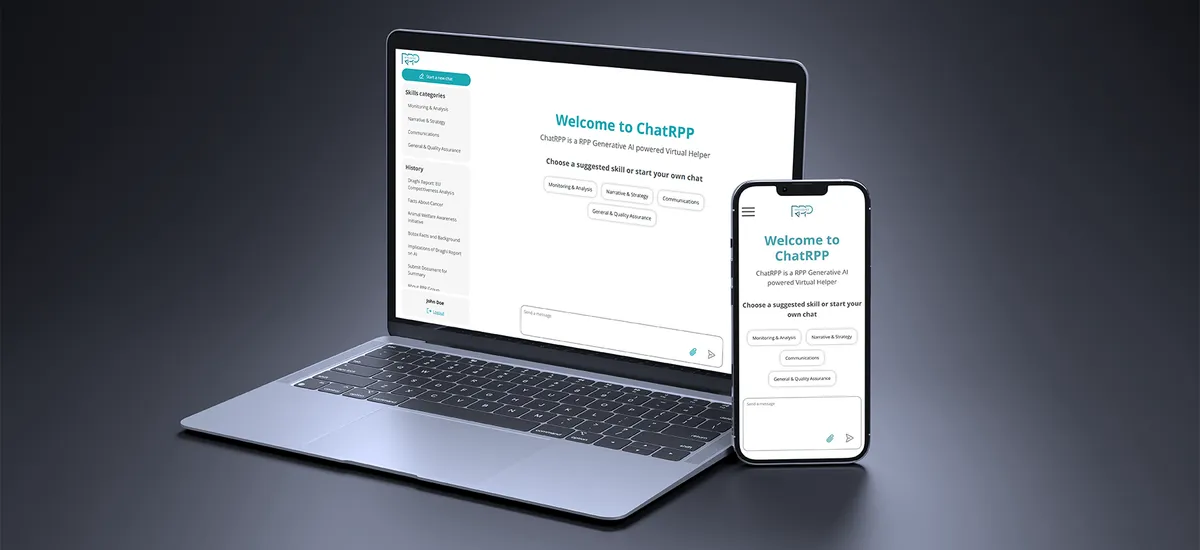
Public affairs · RPP Group
Senior consultants spent hours on document analysis, data structuring and drafting, work that crowded out the strategic side. ChatRPP now carries it, in the firm’s own tone and inside their own infrastructure.
Read the case study
Real estate · under NDA
Every department was doing repetitive document and communication work by hand. A full-day workshop showed each one how to automate its own bottleneck rather than a generic example.
Read the case studyHow to start
The analysis is phase 1 of every project. If you want to build your team’s own sense of what AI can do first, a hands-on workshop is a smaller step.
Describe the process or the area where the time goes. We come back within one business day with an initial assessment and a proposal for a 30-minute scoping call.
Request your process analysisA session for one department, on-site or remote, with nothing to install. Some companies start there, find their own candidates for automation and come back with a process in mind.
See AI WorkshopsFAQ
An AI discovery workshop is theBlue.ai’s process analysis, the first phase of every project. In workshops with the people who run the work, we map your workflows end to end, rank the use cases by return and check whether your data supports them. It ends with a written proposal covering the process map, the architecture, the integration plan, a timeline and a cost estimate.
The analysis has a fixed price from €3k and typically takes one to three weeks. It is a standalone engagement, so the first number you see is the only one you commit to. Implementation typically runs between €25k and €100k, and you get a scoped estimate for it at the end of the analysis.
A written document: the process as it runs today, the use cases ranked by return, the architecture we propose, the systems it would touch with the integration plan, a timeline with milestones and a cost estimate. It is written for people who were not in the workshops and is ready to take into your security and budget approval.
The workshop days are the bulk of it, spread out so nobody has to abandon their job for a week. We need one or two people who run the process, an operational lead, one session with IT or security, and real documents from the process. Between sessions one reachable contact is enough.
They work remotely, and we run them that way when travel does not make sense. On site is usually better for the first block, because half of what we learn comes from watching someone do the work. After that, remote is fine.
Then we tell you. The analysis is designed to surface that, and finding it out at €3k is far cheaper than in the middle of a build. You keep the full analysis and can use it for other decisions.
It is yours to keep. The process map, the architecture direction and the cost estimate are written to be used, including by someone else. Some clients take it to their internal team, some put it out to tender.
With a roadmap rather than another build. Where efforts sit in several business units, each with its own tooling, it establishes what runs today, what overlaps, what earns its place and where the next investment goes. The project phases then run on whichever process comes out of that first.
Yes. If you arrive with a defined scope, a use case and an architecture, theBlue.ai starts at implementation. We review what you have first and tell you where we would do it differently, but the plan stays yours. See how we work.
Describe the process and we’ll come back within one business day with an initial assessment and a proposal for a 30-minute scoping call.