













Multi-Agent Development · Specialised agents, one system

Multi-agent development for processes one agent cannot carry

theBlue.ai builds multi-agent systems for companies: several specialised agents, each responsible for one part of a process, coordinated by an orchestrator that routes the work, passes on context and hands decisions to people where they belong. The architecture follows your process and runs inside the systems you already have, on-premise, in the cloud or hybrid.

INSIDE YOUR SYSTEMS Request case, document, question Orchestrator routes, passes on context SPECIALIST AGENTS Research Document analysis Drafting Quality check Result, checked Decision to a person Specialised agents, one orchestrator, a person for the decisions

Proof

Multi-agent systems in production, in three numbers

theBlue.ai has delivered more than 100 AI and automation projects since 2016. Two of our systems split a process across specialised agents behind one orchestrator, and both are described in full in the case studies below.

70%
Less time on routine manual tasks at RPP Group
11
Knowledge areas, each with its own agent, in a citizen chatbot
100+
AI and automation projects delivered

Some of the organisations we have built for

How it works

One policy paper, four desks

Orchestratorreads the request, splits the work

Policy paper, 100+ pagesuploaded by a consultant
Split into three tasksanalysis, research, drafting

Specialist agentsone role each

Document analysisstructured summary and key points
Researchpositions from policy data
Draftingfirst message in the firm’s tone

Quality checkagents that check agents

Checked against internal standards ✓before anything reaches a client

Your teamdecides and sends

Consultant reviewsapproves the draft and sends it
−70%Time spent on routine manual tasks
5 agentsWorking as one coordinated system
GDPRProcessed inside their own infrastructure

Illustrative example. Figures from the RPP Group case study.

Architecture

Three ways to organise agents

The model matters less than the architecture around it: how tasks are routed, how context is passed on, and who is responsible for each step. The process decides which pattern fits, and the number of agents follows from that.

One orchestrator

A main agent routes every task to the specialists. High control, with the orchestrator as the point everything depends on.

Our projects so far

Peer to peer

Agents hand work to each other directly. More resilient, and harder to observe and debug for your IT.

Hybrid

Coordination where control matters, direct hand-offs where they are safe. Increasingly common in enterprise practice.

Two further layers decide whether a system holds up in production: memory, meaning a working memory for the running process plus persistent knowledge about your company, and standard interfaces such as the Model Context Protocol (MCP) that connect agents to your data and tools. More in our article on architecture, integration and governance.

Control

More agents need clearer responsibilities

An enterprise agent system does not need to be as autonomous as possible. It needs to work reliably, transparently and under control.

One role per agent

Every agent has a defined task, the data it may use and the tools it may call. The orchestrator knows who is responsible for each step.

Agents that check agents

Quality agents verify output against your internal standards, so an inaccuracy is caught before it reaches a client.

Human decision points

The system hands back what needs a human decision. Where those points sit is fixed in the process analysis.

Traceable and inside

You can trace which agent acted and on which data. For RPP Group everything runs GDPR-compliant inside their own infrastructure.

How to start

The process decides how many agents

We start with the process as it actually runs: its branches, exceptions and human decision points. Only then is it clear where an agent is needed, where conventional software is enough and where a person keeps responsibility.

Free · answer within one business day

Describe your process

Tell us which process crosses the most roles, desks or systems. We come back within one business day with an initial assessment and a proposal for a 30-minute scoping call.

Describe your process
Fixed price · from €3k

Start with the process analysis

Workflows mapped with their exceptions, the systems and permissions involved checked, and an architecture proposed with the roles of each agent, scope, timeline and cost. A standalone engagement with no commitment to proceed.

See how we work
  1. 1
    Process analysisFixed price from €3k, architecture and cost in writing
  2. 2
    Build and integrateMilestone-based, first working components in six to eight weeks
  3. 3
    Go live and handoverDocumentation, training and ongoing support available

FAQ

Questions about multi-agent development

A multi-agent system splits a process across several specialised AI agents, each responsible for one type of task, such as document analysis, research, drafting or quality checks. An orchestrator routes the work between them, passes on context and hands decisions to people. theBlue.ai builds these systems inside existing enterprise IT, on-premise, in the cloud or hybrid.

When the work splits into distinct roles or knowledge areas. The citizen chatbot we designed covers eleven domains with one agent each, because no single agent could hold all of them reliably. When one clear task runs through a few systems, a single agent is the better choice; see AI Agent Development. The number of agents is not the goal. It follows from the process.

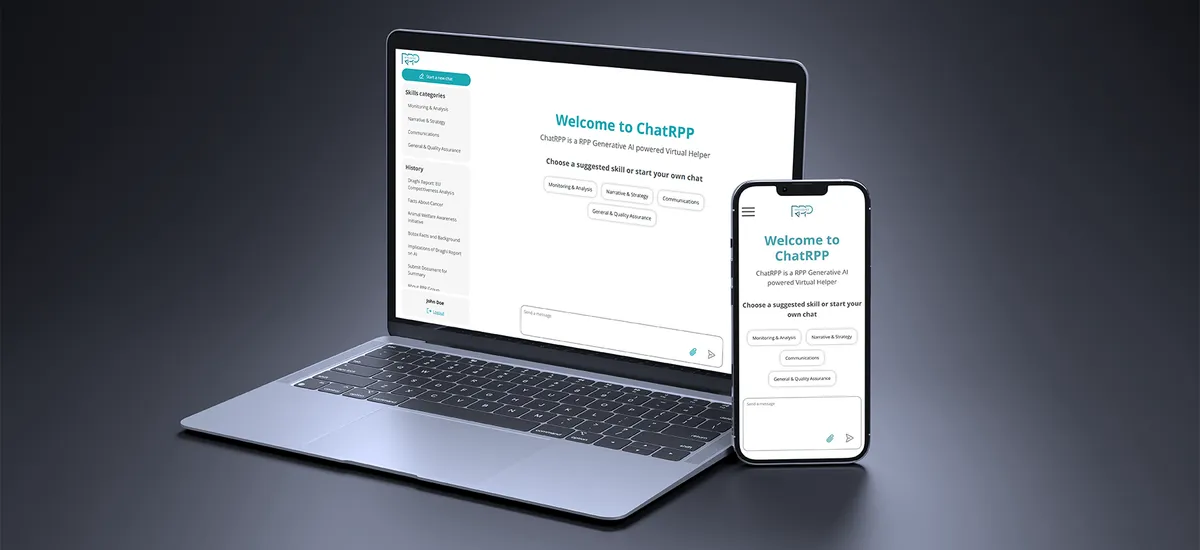
Through an orchestrator. It reads the request, decides which specialists are involved and routes the tasks to them. Context is passed on between steps, intermediate results are validated, and exceptions are escalated to a person. In ChatRPP a main orchestration agent routes each query to document analysis, content drafting, strategic planning or policy research.

The one the process calls for. Our systems so far use one orchestrator in front of specialised agents, which gives high control. Peer-to-peer structures are more resilient but harder to observe, and hybrid models combine both and are increasingly common in enterprise practice. The choice is made in the process analysis.

Every agent gets one defined role, with the data it may use and the tools it may call. Quality agents check the output of the others, the points where a person decides are fixed in advance, and it stays traceable which agent acted on which data. Governance is part of the architecture from the first line of code.

The systems you already run, whether standard software or built in-house: ERP and CRM, document stores, internal knowledge and external data sources, each through its interface. ChatRPP answers from internal documents and external policy data. In the citizen chatbot, domain experts maintain the knowledge base themselves in editable lists, without a developer.

Yes. ChatRPP processes confidential political documents GDPR-compliant inside RPP Group’s own infrastructure, so the material never leaves their controlled environment. theBlue.ai deploys on-premise, in the cloud or hybrid, depending on your security requirements.

Rarely in the model logic, and almost always in fragmented data landscapes. A multi-agent system is only as good as the data it can reach, so integration with the systems that hold that data is the real engineering work. That is why the process analysis maps data flows and interfaces before anything is built.

The process analysis has a fixed price from €3k and ends with an architecture proposal that states the roles of each agent, scope, timeline and cost. The build is priced in milestones, and first working components typically arrive six to eight weeks in.

Tell us which process is costing you the most

Describe the process and we’ll come back within one business day with an initial assessment and a proposal for a 30-minute scoping call.

  • Phase 1 is a standalone engagement, with no commitment to proceed further.
  • Senior engineers from day one. No account managers, no handoffs.
  • We integrate, never replace. Your systems stay exactly as they are.

Not sure which process to start with? Describe where the time goes and we work that out together.

* Required fields.

We’ll come back within one business day.