
Data readiness
The pilot ran on clean samples. Production brings scans, odd formats and missing fields.
We build structured output, validation and edge-case handling from the start.

AI Agent Development · One task, end to end
theBlue.ai builds AI agents for companies: one agent that carries a defined task from end to end. It works out what a request needs, acts inside the systems you already run, standard software or built in-house, through defined tools, checks the result, and hands anything it cannot resolve to a person. The agent runs on-premise, in the cloud or hybrid.
Proof
theBlue.ai has delivered more than 100 AI and automation projects since 2016. In agent projects, the hard part is the step from a convincing pilot to a system that runs on real data, and that step is where our work concentrates.
Some of the organisations we have built for















What an agent takes over
Each one comes from a system we built. The agent does the steps in between; the decisions that need judgement stay with your people.
Product planners ask in plain German or English, typed or spoken. The assistant works out which systems to query, SAP BW or one of several data warehouses, and how to combine the results.
Hours → secondsAutomotive, under NDA
Every incoming email is classified first. Orders are read, including attachments, products are matched against the database and the result is validated before it reaches order entry.
−90% manual interventionRadaway
At Germany’s largest surgical congress, a voice assistant took over the navigation and scheduling questions attendees used to ask staff, calling up programme data through function calls as it answered.
4 days, 100+ sessionsGerman Congress of Surgery
For a public affairs team, an agent reviews new policy documents, summarises the key points, structures the positions and prepares content to internal standards. Final judgement stays with the experts.
Human sign-offPublic affairs
How it works
Illustrative example. Figures from the SAP planning assistant case study.
Choosing the approach
Not every process needs an agent. Some run better on rules, many need a single language model step, and some need several agents working together. The process analysis settles which one fits, and says so when the simpler option is enough.
| Criterion | RULESRules and scripts | LLMOne language model step | AGENTOne AI agent | MULTIMulti-agent system |
|---|---|---|---|---|
| How it works | Fixed if-then logic and templates. | A model reads one input and returns structured output. | One agent plans several steps and acts through tools. | Several specialised agents behind one orchestrator. |
| Fits when | The input looks the same every time. | The task is one step: extract, classify, summarise. | The task crosses systems and each step depends on the last result. | The work splits into distinct roles or knowledge areas. |
| Effort | Lowest | Low | Medium | Highest |
| From our work | Often part of our projects in a supporting role: where rules can do the job, we use them, and AI takes over the parts they cannot handle. | Fr. Meyer’s Sohn: shipping data out of email, see Custom LLM Development | SAP planning assistant: the agent picks the systems to query | RPP Group: five agents, 70% less time on routine work, see Multi-Agent Development |
From pilot to production
The models work and the demos are real. When pilots stall, the cause is almost always one of four things around the model, and each of them is an engineering task we plan for from the first week.
The pilot ran on clean samples. Production brings scans, odd formats and missing fields.
We build structured output, validation and edge-case handling from the start.
An agent that is not connected to your tools, data and permissions stays a demo.
We build the layer that connects it to the systems where the work already happens.
In production someone has to trace why the agent acted and which data it used.
We design for traceability and for passing your security review.
A pilot has a team that loves it. A live system needs someone who monitors and improves it.
We hand over with documentation and training, and ongoing support is available.
Control
The agent works through tools we define, inside your permission logic. Read-only wherever reading is enough.
What falls outside its scope goes to a person with everything found so far. Final judgement stays with your team.
You can see which data the agent used and why it took a step, which regulated environments ask for.
On-premise, in the cloud or hybrid. The data flow is fixed in writing before the build starts.
Case studies
Three systems that carry a task across data sources, email and live conversation, each on real client data.

Automotive · leading luxury manufacturer
Product planners queried SAP BW and several data warehouses by hand for every decision, and each query needed someone who knew those systems. A bilingual assistant now retrieves the data on demand.
Read the case study
Manufacturing · Radaway
Orders arrive as free-form email in whatever wording the customer chose. We took an existing LLM system the last stretch to production: semantic product matching, attachment processing and 90 percent less manual work.
Read the case study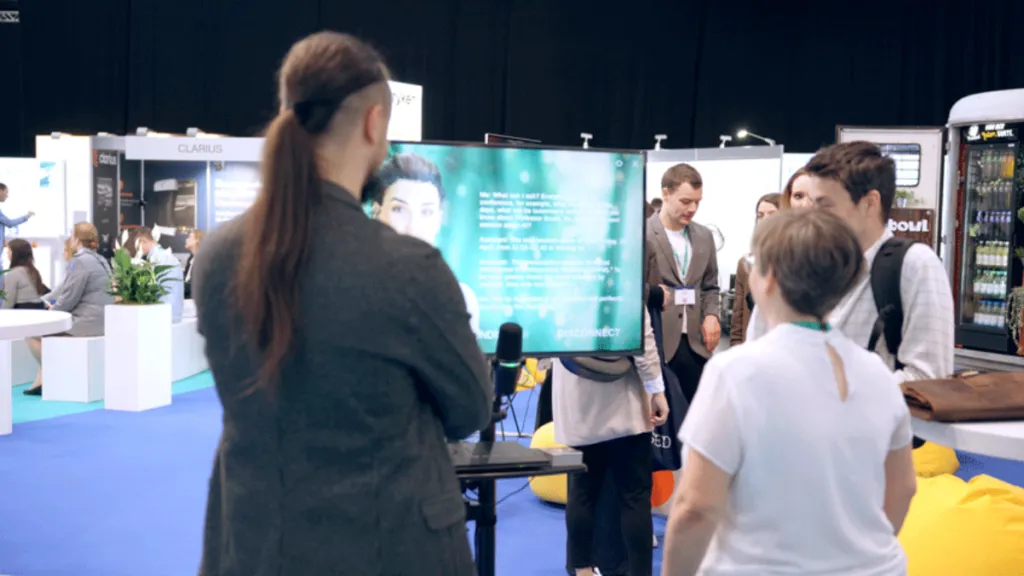
Healthcare · German Congress of Surgery
At Germany’s largest surgical congress, attendees asked staff the same navigation and scheduling questions all day. A voice assistant took those over.
Read the case studyHow to start
A manageable first use case, such as sorting incoming email or answering from internal data, shows results quickly and tells you what the next agent should do.
Tell us which task crosses the most systems or desks. We come back within one business day with an initial assessment of whether an agent fits, and a proposal for a 30-minute scoping call.
Describe your taskWorkflows mapped, the systems and permissions involved checked, and an architecture proposed with scope, timeline and cost. A standalone engagement with no commitment to proceed.
See how we workFAQ
An AI agent is a system built on a language model that carries a defined task over several steps. It works out what is needed, calls tools in your own systems, from ERP and ticketing to software built in-house, checks the result, and then completes the task or hands it to a person. theBlue.ai builds agents that run inside existing enterprise IT, on-premise, in the cloud or hybrid.
A chatbot answers questions in a conversation. An AI agent also takes steps in your systems: it queries your ERP, opens a ticket or drafts a reply, and it can work through a task that needs several such steps in a row. The SAP planning assistant we built decides by itself which systems to query and how to combine the results.
When the input looks the same every time, rules are cheaper and more predictable. When the task is a single step, such as pulling fields out of an email, one language model call with validation is enough. Not every process needs an agent, and the process analysis says so when the simpler option does the job.
One agent fits a task with a clear goal that runs through a few systems. Several specialised agents behind one orchestrator fit when the work splits into distinct roles or knowledge areas. For RPP Group we built five agents that cut the time spent on routine work by 70 percent; see Multi-Agent Development.
The systems you already run, whether standard software or built in-house: ERP and data warehouses, CRM, ticketing, email and document storage, each through its interface. For the SAP planning assistant that meant SAP BW and several data warehouses. The agent reaches them through tools we define, with the permissions the task needs and no more.
With limits built into the system. The agent can only use the tools we define, inside your permission logic, and read-only wherever reading is enough. Its output is validated against fixed rules, cases outside its scope go to a person, and it stays traceable which data it used and why it acted. Final judgement on sensitive decisions stays with your team.
Because production asks different questions than a pilot. Gartner expects more than 40 percent of agentic AI projects to be cancelled by the end of 2027, and IDC found that 88 percent of the proofs of concept it studied never reached broad production. The causes are consistent: data readiness, integration, governance and operational ownership. None of them lies in the model, and all four are engineering work that can be planned.
The process analysis has a fixed price from €3k and ends with an architecture proposal that states scope, timeline and cost for the build. The build is priced in milestones, and first working components typically arrive six to eight weeks in. Where a system already exists it can be faster: Radaway’s went from technical review to production in three weeks.
Yes. theBlue.ai deploys agents on-premise, in the cloud or hybrid, depending on your security requirements. The SAP planning assistant connects securely to the manufacturer’s on-premise SAP systems, and the data never leaves the company.
Describe the process and we’ll come back within one business day with an initial assessment and a proposal for a 30-minute scoping call.