Training
Technique analysed from cameras
Joint angles, posture and range of motion are measured from camera images while the exercise is running, and the athlete or member gets feedback on the spot.

Industries · Sport & Fitness
theBlue.ai builds custom AI systems that analyse movement from cameras, give feedback on technique while the exercise is running, count visitors in studios and venues and answer member and visitor questions. Each system connects to your apps, booking and member systems or your own applications, and can process camera data on the device.
AI in sport and fitness recognises movement on camera images and evaluates training and sensor data. It describes how an exercise is performed and records progress over time.
In clubs, gyms and rehabilitation this supports technique analysis, guidance for exercises outside training hours and the evaluation of training data. Results go to the training app, the practice system or the company’s own platform.
The gain: feedback on execution even without a coach present, progress that can be traced and relief from repetitive evaluation. Training decisions and therapeutic judgement stay with the professionals.
Project example · Research partnership
In a research partnership with hospitals, universities and technology providers, patients recovering from surgery did their exercises at home without a physiotherapist in the room. Done wrong, the exercises can do more harm than good. A 3D coach built from depth cameras and pose estimation now checks the form and corrects it on the spot.
Some of the organisations we have built for















What AI takes over
Coaches and staff cannot watch every repetition or answer every member at once. AI takes over in training, rehabilitation, coaching, venues, member service, events and media.
Training
Joint angles, posture and range of motion are measured from camera images while the exercise is running, and the athlete or member gets feedback on the spot.
Rehabilitation
The system recognises which exercise is being done, grades it against the criteria your therapists set and tells the patient what to correct.
Performance
Data from wearables, GPS trackers and training equipment is combined, and patterns in load and recovery are prepared for the coaching staff.
Coaching
Goals, progress and feedback from past sessions become a draft plan for each member or athlete, and the coach adjusts and approves it.
Venues
Compact devices count people at entrances and exits from sensor data and camera images, processed on the device, and studios and venues see live occupancy.
Member service
Questions about bookings, courses, contracts and opening hours are answered by chat or voice at any hour, and the conversation passes to your team when a person is needed.
Events
An AI avatar or voice assistant answers visitor questions about schedules, results and the venue in real time, in several languages.
Fans
Social media posts during a match or event show how fans react, which topics trend and who drives the conversation, as it happens.
Media
Players, actions and scenes in video are recognised and tagged, and coaches and media teams find the sequences they need in seconds.
How it works
Squat, repetition 7: knee angle 84°, left knee moves inward.
Back inclined 14°, weight evenly on both feet.
Repetition 7 · assessment
Illustrative example with invented data, based on the 3D movement coaching case study.
Built for sport and fitness
Feedback that arrives while the movement is still happening, criteria set by experts and people who have to stay motivated.
Feedback comes during the repetition, and camera data can stay on the device.
Coaches and therapists define what correct form looks like for each exercise, and the system grades against exactly that.
Game elements and visible progress address the reason most training and home programmes are dropped.
The system measures, flags and prepares. Training plans, progressions and every decision about an athlete or patient stay with your experts.
Case studies
Our 3D movement coaching project, and two projects from related fields: a voice assistant at a large medical congress and an AI avatar at a trade fair.
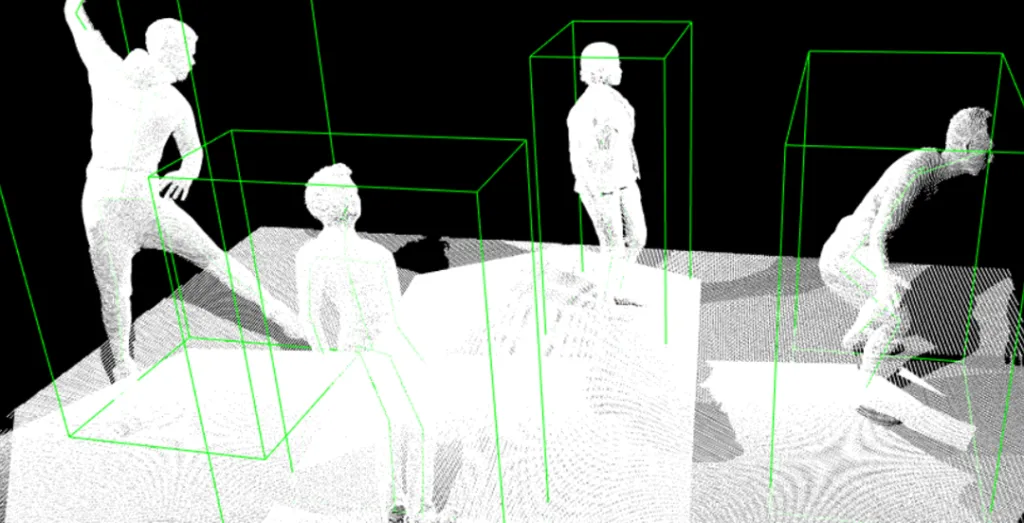
HealthTech · rehabilitation
Patients recovering from surgery needed a therapist present to check their exercises. A 3D system now watches the movement, spots incorrect form and corrects it, at home.
Read the case study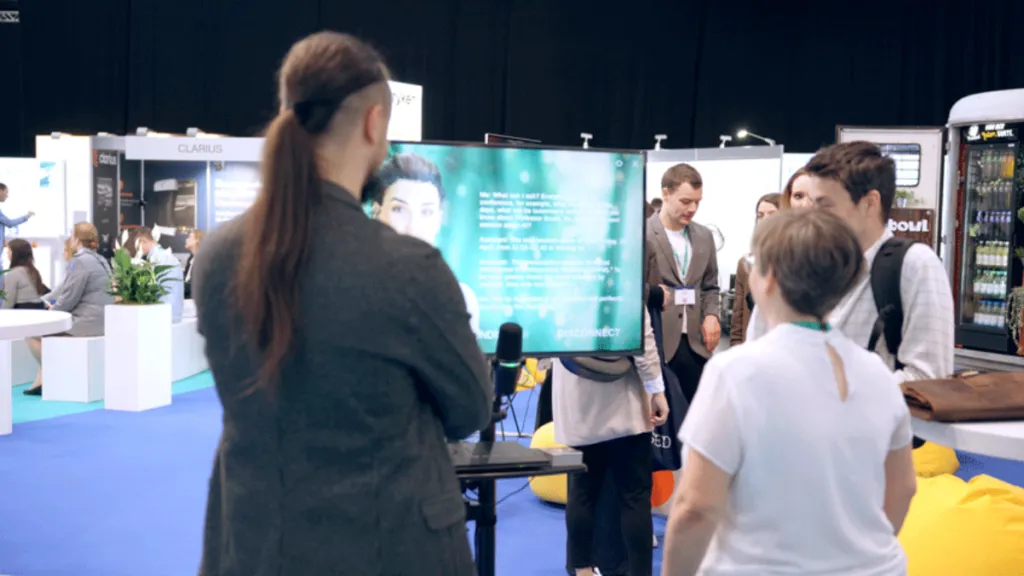
Healthcare · German Congress of Surgery
At Germany’s largest surgical congress, attendees asked staff the same navigation and scheduling questions all day. A voice assistant took those over.
Read the case study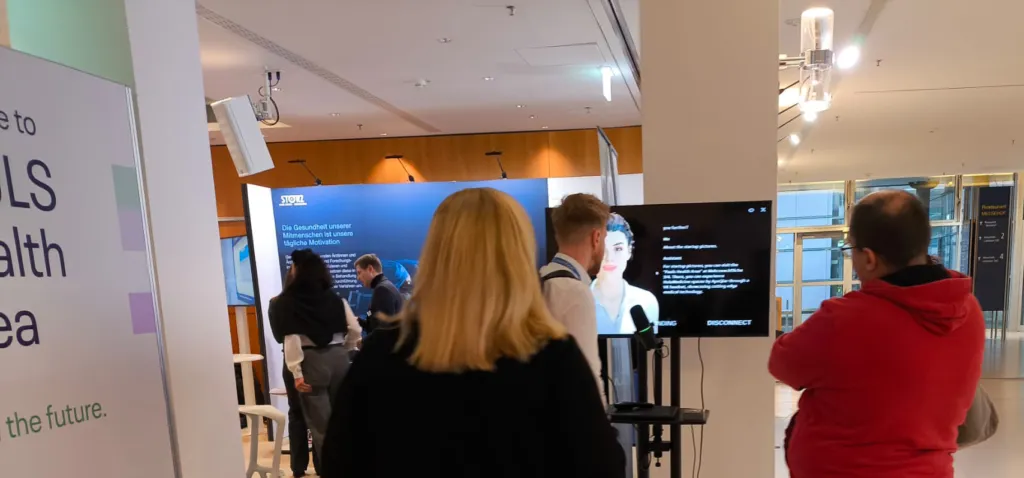
HealthTech · Xpomet Medicinale 2024
Visitors at a healthcare innovation congress kept asking the same questions about exhibitors, sessions and directions. An avatar answered them in English and German, so staff could hold the conversations that mattered.
Read the case studyHow to start
A training session, a studio entrance or a member inbox: the work your team does by hand today, and the data it runs on. We check early whether the data carries the use case and where it may be processed.
Tell us where the manual work sits and which data it involves. We come back within one business day with an initial assessment and a proposal for a 30-minute scoping call.
Describe your processWorkflows mapped, your data sources and requirements checked, and an architecture proposed with scope, timeline and cost. A standalone engagement with no commitment to proceed.
See the AI Discovery WorkshopFAQ
In sport and fitness, AI takes over work that coaches, therapists and staff otherwise do by hand: technique and exercise form from camera images, training and sensor data, draft training plans, occupancy in studios and venues, member questions, visitor questions at events, fan reactions on social media and match footage. The AI system prepares the result, and coaches and therapists decide.
Yes. In a research partnership theBlue.ai built a 3D coach from several calibrated Azure Kinect depth cameras and pose estimation. It recognises exercises such as squats, arm raises and balance exercises, grades them against the criteria physiotherapists defined and tells the patient immediately what to correct, for example a knee bending inward or a back that is not straight enough.
For routine exercises, yes. The 3D coach was built for patients recovering from surgery who exercise at home, where nobody watches the form. Virtual reality game elements turn repetitive exercises into goal-driven activity, which addresses why most unsupervised home programmes are abandoned.
Yes. With RapidLab theBlue.ai built compact devices that count people at entrances and exits from time-of-flight sensor data and camera images, processed entirely on the device without cloud or internet. They show live occupancy where manual counting is impractical and turnstiles are too expensive or not possible.
Yes. At the Congress of the German Society of Surgery theBlue.ai deployed a voice assistant that answered attendee questions about sessions, schedule changes and the venue for four days, and at XPOMET Medicinale an AI avatar handled visitor questions in two languages in a noisy, busy hall.
With one process, such as form feedback for one exercise programme, and the data behind it. The process analysis has a fixed price from €3k and ends with an architecture proposal that states scope, timeline and cost, including where the data may be processed. The build is priced in milestones, and first working components typically arrive six to eight weeks in.
Describe the process and we’ll come back within one business day with an initial assessment and a proposal for a 30-minute scoping call.